

Introduction: First Moments Make the Map
Here’s a simple truth: first moments steer your whole visit. Reception Desks sit right at the front, like the first smile of a place. Picture this: a parent with a stroller, a courier with a cart, and a guest who is late. Studies say many people judge a space in under one minute, sometimes in 30 seconds. Now add a modern reception desk that guides people, not just looks nice (small but mighty). Which choice helps that parent, the courier, and the guest at the same time?
We will compare what works and what trips people up. Direct and simple. Clear lines, short waits, and tools that fit. Because a counter is more than wood and polish—it is a tiny system, with flows, signals, and comfort settings. Ready to find the winning setup? Let’s move to what usually goes wrong, and why.
Hidden Gaps in the Usual Approach
What’s really broken?
The old path looks easy: pick a pretty counter, add a sign, done. But that path hides pain. People can’t find the check-in spot. Staff can’t hear through echo. Cables tangle near feet. Power bricks overheat under panels. ADA knee space gets blocked by a drawer. When rush hour hits, the queue spills into the door. These are small errors that add up. The fix starts with flow. Wide approach lanes. Clear sight lines. Surfaces that cut glare. A quiet core that softens noise. Cable management that keeps power converters cool and safe—funny how that works, right?
Now the tech bits. Look, it’s simpler than you think. A smart counter routes cords through a trunk, not a leg. It has a load-bearing frame that supports screens without wobble. It uses a laminate substrate that resists dents but stays warm to the touch. It plans for a small scanner or badge reader, not a bulky tower. If you add two edge computing nodes for self check-in, you still keep air flow open. That way, staff don’t fight heat, hum, or clutter. The result is calm. People see where to go. Staff get tools that feel invisible. That is the real win.
Comparative Lens: From Nice Counter to Smart Welcome Hub
What’s Next
Let’s look forward with a technical lens. A desk is no longer only a box; it is a small network of tools. New builds run USB‑C power delivery so you avoid random bricks. They add PoE switches to feed tablets and small displays with one cable. Occupancy sensors help a queue screen show wait times. A compact mic array cuts reverb, so voices stay clear. These are simple, new technology principles: fewer adapters, cooler gear, better signal paths. Add an RFID reader for badges, and a thermal printer on a shock pad to reduce shake. Each piece has a clear route and a job, like parts in a tiny station. Compare that to the old way with mixed cords, hot spots, and blocked air. The smart hub stays tidy, safe, and fast—because the system is the point, not the paint.
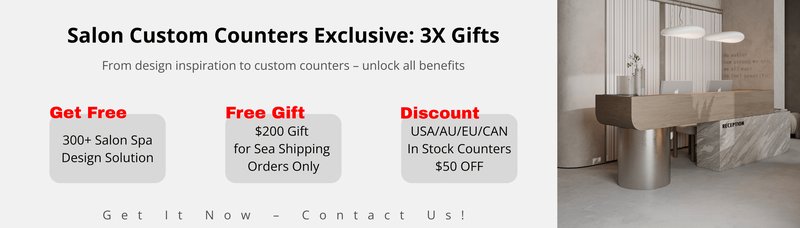
In service spaces, the contrast is vivid. A salon reception desk can sync booking, payment, and retail in one line of sight. Low shelves face guests; high shelves face staff. A queue light pings when a stylist is free. Power comes from a shared rail, not a floor tangle. Acoustic panels absorb chatter so greetings feel calm. Even small moves help: anti-fatigue mats for staff, cable grommets near the edge, and an under‑counter fan for steady airflow. Summed up: better flow, fewer steps, and clearer signals lead to warm welcomes and shorter waits—funny how that works, right?
Before we close, here are three practical metrics to guide your choice. One, wayfinding clarity: can a first-time guest spot the start point in three seconds or less? Two, thermal and power: do devices stay under safe temps with power draw mapped to a single rail, not scattered bricks? Three, service ergonomics: can staff reach, scan, and print within one arm span without twisting? Use those checks, and your desk becomes a real tool, not just furniture. For deeper specs and modular examples that match these ideas, see M2-Retail.


Leave a Reply